
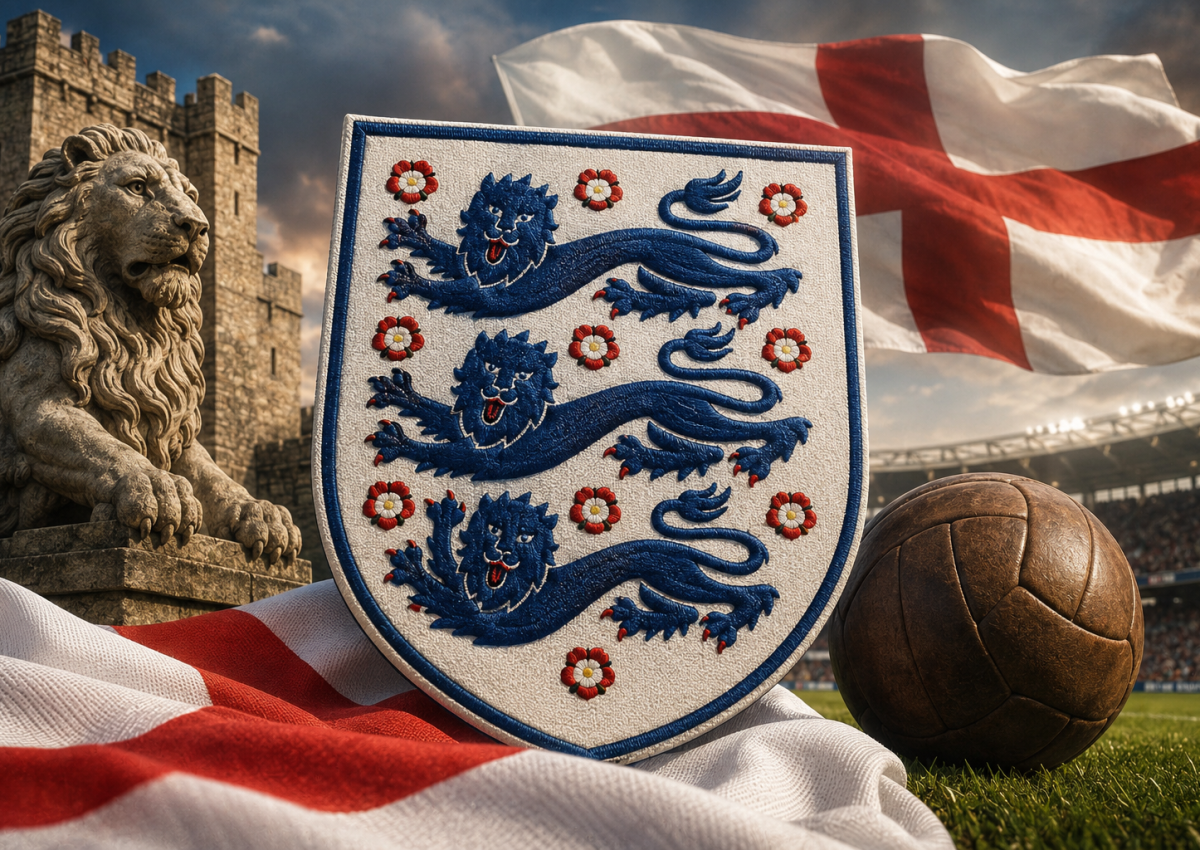
Every time England takes to the pitch at a World Cup, millions of fans proudly wear the famous Three Lions badge. It has become one of the most recognisable symbols in world football, appearing on shirts, scarves, flags and merchandise across the country.
But while many people associate the Three Lions with football, the emblem’s history stretches back hundreds of years before the beautiful game was even invented.
As England once again dreams of World Cup glory, it’s worth exploring the fascinating heritage behind one of the nation’s most enduring symbols.
Where Did the Three Lions Come From?
The story of England’s Three Lions begins long before football, and even before England existed as a united nation.
The lion was one of the most powerful symbols in medieval Europe, representing courage, strength, nobility and royal authority. Although lions were not native to Britain, they appeared frequently in heraldry and were adopted by ruling families across the continent.
The first lion associated with the English Crown is believed to date back to the reign of King Henry I (1100–1135). Henry’s marriage to Matilda of Scotland brought together powerful royal lineages, and lions began appearing in royal symbolism during this period.
The story developed further under Henry II (1154–1189). Through his marriage to Eleanor of Aquitaine, whose family also used lions in their heraldic devices, royal symbolism became increasingly associated with the animal. Historians believe that by combining family emblems and royal traditions, the foundations were laid for the famous coat of arms that would follow.
It was Henry II’s son, King Richard I (1189–1199), better known as Richard the Lionheart, who is generally credited with establishing the three golden lions as the royal arms of England.
Early in his reign, Richard used shields featuring one or two lions, but by the 1190s his Great Seal displayed the now familiar design of three gold lions passant guardant – walking lions with their heads facing forwards – set against a red background.
The exact reason for three lions remains debated by historians. Some believe Richard combined the lions associated with his father’s Angevin dynasty and his mother’s Aquitanian lineage. Others suggest the design evolved gradually through successive royal seals and coats of arms.
Whatever their precise origin, by the end of the 12th century the three lions had become firmly established as the emblem of the English monarchy.
For the next 800 years, the Three Lions would appear on royal standards, castles, armour, coins, government buildings and military banners. They survived wars, dynastic changes and constitutional reforms, becoming one of the oldest continuously used national symbols in Europe.
Long before they appeared on an England football shirt, the Three Lions were a symbol of kings, kingdoms and the history of England itself.
A Symbol of English Identity
Throughout the medieval period, the Three Lions became far more than a royal emblem.
English soldiers carried banners bearing the lions during campaigns in France and beyond. The symbol appeared on armour, coins, architecture and government records, becoming one of the most recognisable images of English identity.
Many historic houses and castles featured carvings and decorations incorporating lions as symbols of strength, courage and royal authority.
Over centuries, the Three Lions evolved into a national symbol recognised around the world.
How the Three Lions Became England’s Football Badge
When international football began in the 19th century, the Football Association looked to England’s rich history for inspiration.
The FA adopted a version of the royal arms featuring the Three Lions, helping create a direct connection between England’s national team and the country’s heritage.
England wore the badge during their earliest international matches, and it has remained at the heart of the team’s identity ever since.
Although the design has been updated over the years, the Three Lions themselves have never disappeared.
Today, the badge serves as a powerful reminder that England’s footballing traditions are rooted in centuries of history.
Heritage Sites Where You Can Spot the Three Lions
Visitors interested in the history of the Three Lions can find examples across England’s heritage attractions.
Look out for heraldic carvings, coats of arms and royal emblems at:
- Medieval castles
- Historic royal palaces
- Cathedrals and abbeys
- Stately homes
- Historic market halls
- Ancient gateways and city walls
Many heritage sites contain centuries-old depictions of the symbol, offering a fascinating glimpse into how England’s national identity developed through the ages.
More Than a Football Badge
As England competes on the world stage, the Three Lions continue to unite supporters across generations.
Yet their story began long before football, tracing a remarkable journey through medieval kingship, royal heraldry, military history and national identity.
The next time you see the Three Lions on an England shirt, remember that you are looking at a symbol with a history stretching back more than 800 years – a living piece of England’s heritage that continues to inspire millions today.