
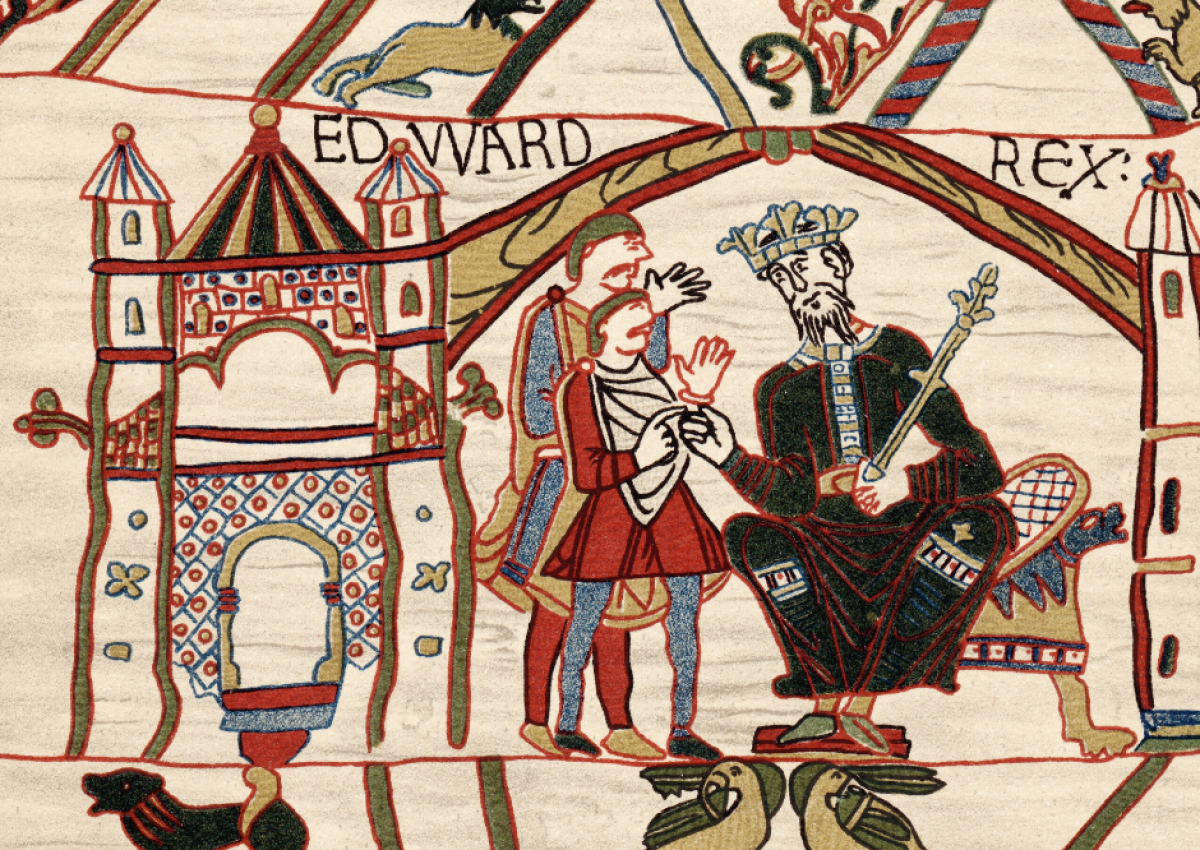
The Bayeux Tapestry Returns: A Landmark Moment for British History
In a moment of exceptional historical resonance, the Bayeux Tapestry will be exhibited in Britain for the first time in nearly 900 years when it goes on display at the British Museum from September 2026 to June 2027. One of the most important surviving works of medieval art, the tapestry’s arrival represents a rare opportunity to encounter a defining narrative of British history on home soil.
Stretching approximately 70 metres in length, the embroidered textile chronicles the events leading up to the Battle of Hastings in 1066 and the subsequent Norman Conquest of England by William, Duke of Normandy. Through a continuous sequence of vividly detailed scenes, it records political intrigue, military preparation, naval crossings and battlefield conflict, offering an extraordinary visual account of one of the most consequential moments in England’s past.
A Medieval Masterpiece
Despite its name, the Bayeux Tapestry is not technically a tapestry but an embroidery, worked in coloured wool threads on linen. Created in the 11th century, it is widely believed to have been produced in England, most likely in Canterbury, where skilled embroidery workshops were active at the time. Its craftsmanship, narrative clarity and scale set it apart as a unique survival from the medieval world.
For centuries, the tapestry has been preserved in Bayeux, Normandy, where it has become a cornerstone of French and European heritage. Its long absence from Britain has only heightened its symbolic importance, making its temporary return both culturally and historically significant.
Telling the Story of 1066
The tapestry’s narrative begins with the political tensions surrounding the English throne following the death of Edward the Confessor and unfolds with remarkable attention to detail. Kings, nobles, soldiers and ships are rendered with energy and precision, while border scenes add layers of symbolism and commentary. The result is not only a historical record but a carefully constructed piece of visual storytelling, reflecting Norman perspectives, power structures and medieval ideas of legitimacy and conquest.
While the tapestry has long been studied as a source for understanding the Norman Conquest, historians continue to debate aspects of its interpretation, authorship and intent. This ongoing scholarly interest underscores its enduring relevance as both an artistic and historical document.
A Rare Homecoming
The exhibition at the British Museum marks an unprecedented moment. Although believed to have been made in England, the Bayeux Tapestry has remained in France for centuries, surviving revolution, war and political upheaval. Its display in London offers a powerful sense of homecoming, reconnecting the object with the landscape and history from which it emerged.
For visitors, the exhibition provides a chance to view the tapestry not as an image in books or digital reproductions, but as a physical artefact. They can experience its scale, texture and craftsmanship at close quarters.
Legacy and Significance
The Bayeux Tapestry occupies a unique place in Britain’s historical imagination. It stands at the intersection of art, politics and power, capturing the moment when England’s future was irrevocably reshaped. Its return to Britain invites renewed reflection on identity, conquest and cultural exchange in medieval Europe.
As it takes its place in the British Museum from September 2026 to June 2027, the tapestry offers an extraordinary opportunity to engage directly with a masterpiece that has shaped how history itself is remembered. For scholars, heritage professionals and the wider public alike, this exhibition represents a once-in-a-generation encounter with the story of 1066, told in thread, linen and enduring human ambition.