
How Technology Helps Preserve Heritage: Digital Tours, VR Excursions, and Apps
The idea of preserving cultural heritage used to have a single meaning. It had everything to do with safeguarding physical locations and artefacts against destruction, aging, and decay. Castles needed restoration. Museums needed funding. Ancient sites needed fences and warning signs. Technology has added a whole new layer to heritage preservation. One that does not replace physical conservation but strengthens it. Digital tools now help us document, experience, and protect history in ways that were impossible just a decade ago.
With online museum visits to virtual reality tours and mobile applications that transform your phone into a portable cultural heritage tour guide, technology is slowly turning out to be one of the foremost cultural heritage advocates. It brings history closer, more enjoyable, and more attainable to the current times. Let’s check how it all works.
Why Heritage Preservation Needs Technology
Cultural heritage is fragile. Weather, tourism, urban development, conflict, and simple aging all take their toll. Not everyone can travel to see world-famous sites. Even those who can may unknowingly contribute to their deterioration. Technology helps solve several problems at once:
- It documents sites and artefacts in detail
- It reduces physical pressure on sensitive locations
- It expands access to people worldwide
- It creates digital backups in case of damage or loss
In short, tech makes heritage preservation smarter, safer, and more inclusive.
New Careers and the Role of Online Job Search
Heritage preservation becomes more digital. So, new career paths are emerging. Cultural institutions now need people who understand both history and technology. Here are just some of the popular roles:
- Digital archivists
- VR content designers
- App developers for cultural tourism
- UX writers and multimedia editors
- Data specialists for heritage documentation
Many of these roles are remote or hybrid, especially those related to content creation, research, and digital platforms. That is where online job search becomes especially important. You can now find all the interesting roles with a few clicks on the Jooble employment site.
The global job platforms, freelance marketplaces, and project-based contracts have given professionals an opportunity to find heritage-related opportunities. Museums and cultural organisations tend to come together with foreign professionals whom they would never access through conventional hiring procedures.
Digital Tours: Museums Without Walls
Digital tours are something that technology brings to the table. Online tours, where a visitor can help visit collections despite their location in the world, are now possible in museums, galleries, and historical sites.
It is possible to have high-resolution photography, 360-degree views, as well as interactive hotspots that allow users to zoom in on details that would have been hard to see in reality. Some sites go to the extent of comments by professionals, shots of events, and backstage stories. The following are the strengths of this strategy:
- Individuals who have problems with mobility are able to move around comfortably.
- Tours can be applied in remote learning in schools.
- Museums have the potential to reach international audiences.
- Physical objects are guarded against being handled.
- Digital tours are also a marketing strategy of many smaller institutions.
For many smaller institutions, digital tours are also a marketing tool. Someone who explores a museum online today may become an in-person visitor tomorrow.
Virtual Reality Excursions: Stepping Into the Past
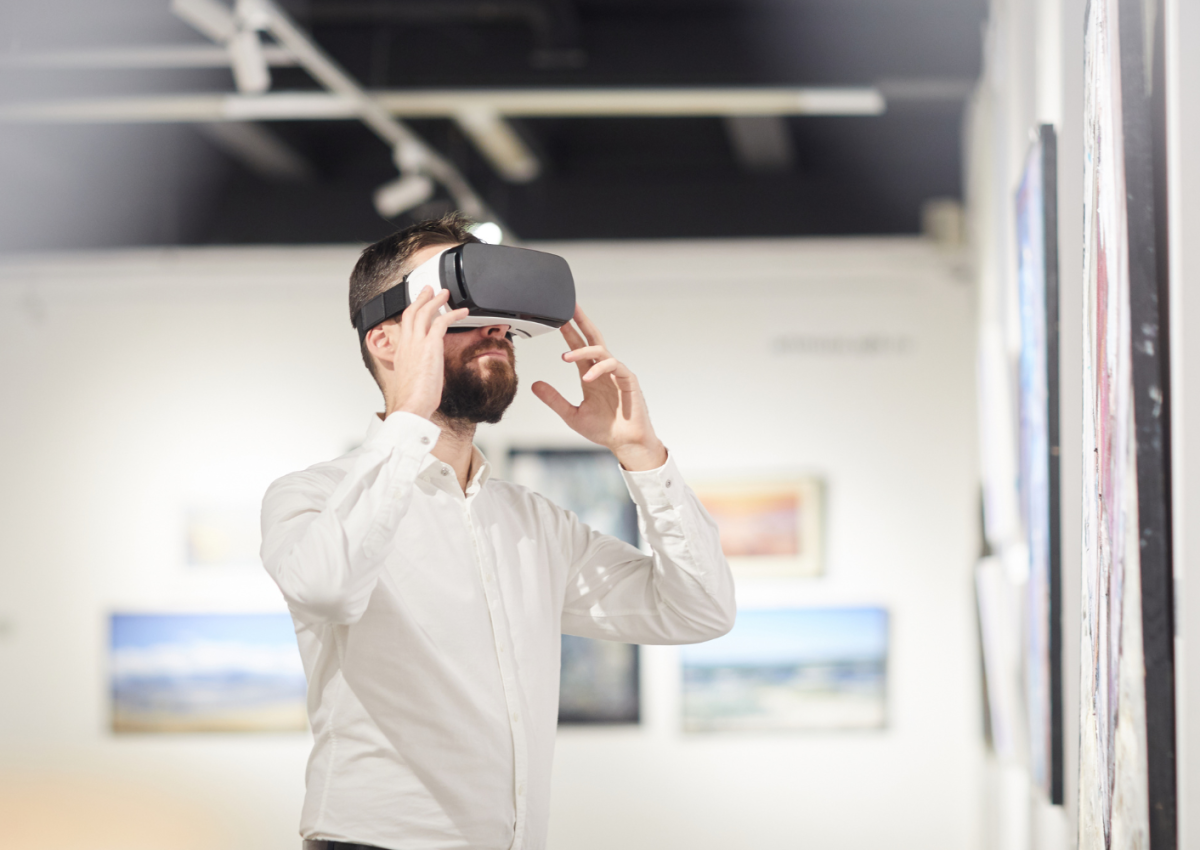
Digital heritage is one step ahead in virtual reality. Users are not only able to view history, but they can also enter it. VR tours are reconstructed ancient cities, historical events, and lost buildings that are built according to archaeological evidence. It is possible to stroll in ancient Rome, climb to the top of a medieval cathedral, and see how it used to look hundreds of years ago, or visit the ruins that are usually closed to visitors. This proves particularly useful in:
- Sites that are damaged or partially destroyed
- Locations affected by conflict or natural disasters
- Structures that no longer exist
VR also helps researchers and students visualise spaces in three dimensions. This can lead to new insights. For the public, it turns history into an experience rather than a lecture.
Mobile Apps: History in Your Pocket
The use of heritage apps has revolutionised the way individuals communicate with historical sites. Visitors do not have to read long plaques or guidebooks to get instant context, they can check their phones. Many apps offer:
- Audio guides in multiple languages
- Augmented reality overlays showing how sites looked in the past
- Interactive maps and walking routes
- Stories tied to specific locations
Certain apps will go as far as to use GPS to activate content when in motion. This fact makes the exploration retrospective and intimate. This form of interaction is particularly attractive to the younger population, who anticipate digital treatment to be included in any experience. Some of the uses of the apps include enabling heritage organisations to update their content or add seasonal features, and customise information based on the type of visitor.
Technology as a Tool for Documentation and Protection
Beyond the experiences visible on public, technology is an important resource behind the scenes, creating an accurate digital record of monuments and artefacts through 3D scanning, photogrammetry, and drones. The purposes of these records are:
- Restoration planning
- Academic research
- Disaster recovery
- Long-term preservation
In case of damage to a site, digital models can be used to guide the reconstruction process or act as the permanent record of what was there originally. In others, it is only these digital archives that remain as documentation.
Making Heritage More Inclusive
Another issue that technology assists in solving in the context of heritage preservation is inclusion. The digital access eliminates the geographic, physical, costly, and language barriers. A student in a small town will be able to study the world heritage sites without the use of travel costs. An individual who is unable to visit a place physically can nonetheless have an experience with it. X-lingual applications and tours are used to access more people. Inclusion does not only entail access. It is also concerning representation.
Challenges and Responsible Use of Technology
Online projects need investments, technical skills, and maintenance. It is also possible to transform heritage into mere entertainment and lose its depth or precision. That is the reason why responsible use is important. Projects that are successful strike a balance between historical factuality, moral narrative telling, long-term preservation objectives, and participation by users. Heritage should be supported by technology.
The Future of Digital Heritage Preservation
The preservation of heritage is likely to be even more immersive and data-driven. AI could be used to recreate broken artworks on a computer. Mixed reality would allow physical visits to be fused with a virtual overlay. Provenance and authenticity can be tracked with the help of blockchain.
The goal does not change. The whole thing is how to preserve the cultural heritage and, at the same time, keep it alive, relevant, and accessible. History is not being supplanted by technology. It is rendering it in a new way of seeing, hearing, and experiencing.
Let’s Wrap It Up
Cultural heritage links us to our origin. Technology serves to make sure that such connections are not lost due to time, distance, or destruction. Heritage preservation has never been more dynamic with the use of digital tours, VR tours, mobile applications, and emerging digital careers facilitated by an online job search. The history is no longer behind the walls or museum doors. It is changing and finding people in ways that are of the current world. And that perhaps is one of the most effective ways of keeping it safe.