
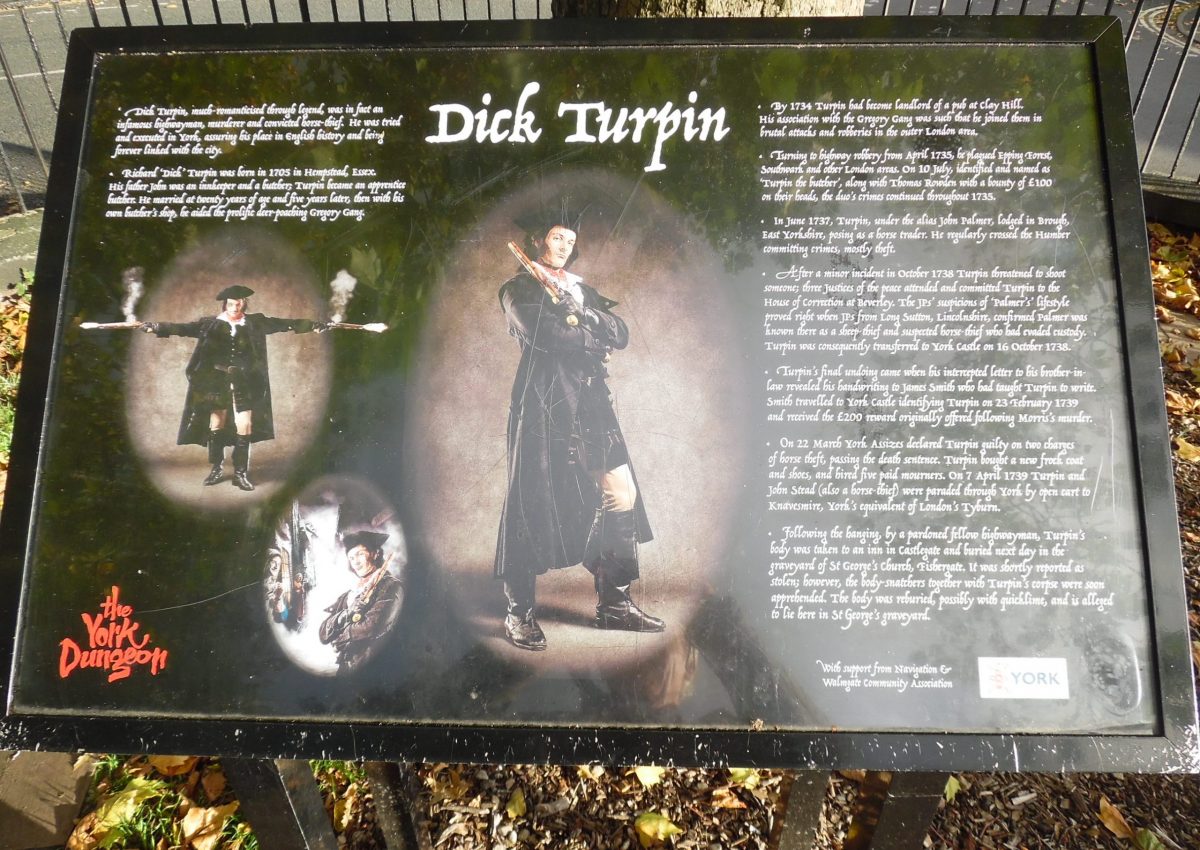
Who Was Dick Turpin Really?
Despite his legend as a charming rogue riding Black Bess from London to York, the real Dick Turpin was far from a heroic figure. He was a violent criminal, involved in theft, burglary, and even murder.
Born in 1705 in Hempstead, Essex, Turpin started life as a butcher’s apprentice before turning to a life of crime. Far from the dashing highwayman portrayed in popular folklore, the truth about Turpin is far more sinister, and far more interesting.
Early Life of Dick Turpin
Richard Turpin was the fifth of six children born to John Turpin, a butcher and innkeeper, and Mary Parmenter. Raised at the Blue Bell Inn, he married Elizabeth Millington and opened a butcher’s shop in Essex.
But by the late 1720s, Turpin had left his trade behind to join the Essex Gang, also known as the Gregory Gang, a group of violent deer poachers turned burglars.
From Butcher to Burglar
Turpin’s role in the gang was to sell illegally poached deer, but it wasn’t long before he was involved in violent home invasions, including a robbery in December 1734 that netted £300 (over £50,000 today). His crimes escalated quickly.
In one infamous incident in Croydon, Turpin broke into a reverend’s home while masked and armed, supervising the assault of a servant. These brutal burglaries drew attention, and after the arrest of fellow gang member John Wheeler, most of the gang was captured or executed.
The Highwayman Years
With his gang dismantled, Turpin became what he’s most famous for: a highway robber. He targeted travellers around Epping Forest, often alongside accomplice Thomas Rowden. Their robberies became so frequent that Turpin had to keep moving to avoid capture.
Despite the romantic image of him galloping across the countryside, Turpin was essentially a violent thug on horseback, notorious for threatening, robbing, and in some cases, killing his victims.
Dick Turpin’s Downfall
In 1737, a series of events sealed Turpin’s fate. After a horse theft in Whitechapel, the animal was traced to a pub Turpin was using as a hideout. One of his gang members was killed in the chaos – some say by Turpin himself.
Later, Turpin shot and killed Thomas Morris, a forest keeper who tried to apprehend him. A £200 reward was placed on his head, forcing him into hiding under the alias John Palmer in Yorkshire.
How Was Dick Turpin Caught?
While posing as Palmer, Turpin was arrested for shooting a man’s fighting cock and making threats. Committed to the House of Correction in Beverley, he didn’t attempt to escape.
But his identity was revealed after he sent a letter to his brother-in-law. The letter was rejected and ended up at a post office in Saffron Walden, where someone recognised his handwriting. He was soon identified as Dick Turpin and charged with horse theft which was a capital crime at the time.
The Execution of Dick Turpin
Turpin was held at York Castle and made no attempt to resist execution. Before his death, he:
-
Bought a new coat and shoes
-
Hired five mourners (paying £3 and 10 shillings)
-
Received visitors and letters from family
-
Refused the offer of a priest
On 7 April 1739, Turpin was taken to Knavesmire, the city’s execution site. York had no official hangman, so fellow highwayman Thomas Hadfield acted as his executioner.
The short-drop method meant Turpin’s death was slow and painful, and his body hung for hours before being taken down. He was buried at St George’s Church in Fishergate, but his corpse was stolen by body-snatchers the next day. It was later recovered and reburied.
Debunking the Black Bess Myth
Turpin did not ride from London to York on his loyal steed Black Bess, that tale was entirely fabricated by 18th-century writers to romanticise his story. In reality, his capture had nothing to do with daring escapes and everything to do with poor decision-making and bad luck.
Other Infamous British Highwaymen
While Dick Turpin remains the most famous, he wasn’t the only highwayman stalking Britain’s roads. Here are a few others who lived, and died, by the sword (or noose).
Wild Humphrey (Humphrey Kynaston)
-
Noble-born outlaw from Shropshire, outlawed in 1491 for murder
-
Lived in a cave, robbing the rich and allegedly helping the poor
-
Rode a horse named Beelzebub
-
Pardoned by the king in 1518
The Wicked Lady (Katherine Ferrers)
-
Born into aristocracy, fell on hard times after marriage
-
Turned to highway robbery in Hertfordshire
-
Fatally shot during a robbery in 1660
-
Said to haunt Nomansland Common
William Spiggot
-
Led a gang for 12 years, robbing travellers at gunpoint
-
Arrested after a shootout in a pub, injuring the landlord
-
Tortured using the “pressing” method until he confessed
-
Claimed over 100 robberies before being hanged at Tyburn
The Laughing Highwayman (Jerry Abershawe)
-
Nicknamed for laughing on the way to his execution
-
Known for being both handsome and brutal
-
Convicted of murdering an officer during arrest
-
Hanged at Kennington Common, then displayed on Putney Common as a warning
The Truth Behind the Legend
Dick Turpin’s legacy has been wildly exaggerated over the centuries. Far from the charming rogue of folklore, the real Turpin was a violent criminal, caught more by misfortune than heroics. His execution, while tragic, was the result of years of escalating crime.
But the myth lives on. Proof that history, when told well, doesn’t always need to be factual to be fascinating.